
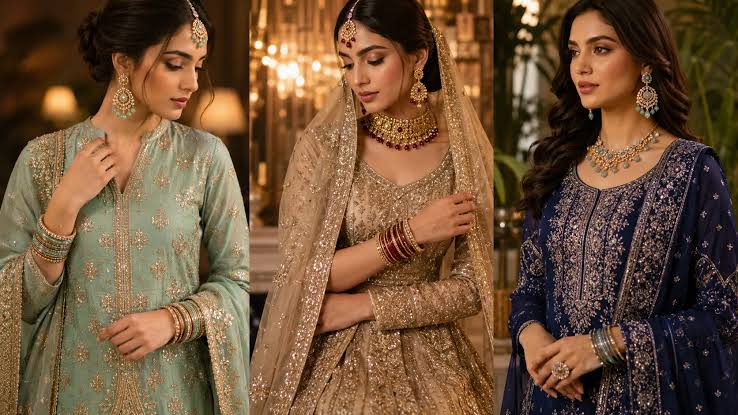
Pakistani fashion is widely appreciated for its detailed embroidery, rich fabrics, and traditional craftsmanship. Among the most recognised decorative techniques are zari, dabka, and gota, which add elegance and cultural character to formal outfits. These embellishments have remained important elements of Pakistani designer wear, particularly in wedding dresses, festive collections, and traditional party outfits. Each technique has a distinctive appearance, texture, and application, making it suitable for different clothing styles. Understanding these embroidery methods helps in selecting outfits that balance traditional beauty, modern fashion, and practical comfort for special occasions.
Understanding Traditional Embellishments in Pakistani Fashion
Traditional embellishments play an important role in Pakistani clothing because they add texture, detail, and visual interest to different fabrics. Embroidery techniques are often influenced by regional traditions, historical clothing styles, and skilled handwork passed between generations. Zari, dabka, and gota are three popular methods frequently featured in formal and bridal collections. Although all three techniques involve decorative elements, each creates a different effect. Zari introduces metallic shine, dabka adds raised and structured detailing, while gota creates decorative patterns using metallic ribbons. These techniques can appear individually or together, depending on the outfit’s design and level of decoration.
What Is Zari Embroidery?
Zari is a traditional embroidery technique that uses metallic threads, traditionally made with gold or silver, to create decorative patterns on fabric. Modern zari work may also use metallic-coated threads in different shades to achieve a similar appearance. This embroidery is commonly applied to silk, chiffon, organza, velvet, and other formal fabrics. Floral patterns, geometric shapes, borders, and intricate motifs are among the most popular zari designs. In Pakistani designer wear, zari embroidery is often used on shirt fronts, sleeves, necklines, dupattas, and trouser hems. Its reflective finish creates a graceful appearance, making it suitable for weddings, Eid celebrations, and formal evening events.
Popular Types of Zari Work
Zari embroidery comes in different forms, depending on the thread, technique, and desired finish. Traditional metallic zari offers a rich appearance, while modern versions provide more affordable decorative options. Zardozi is a related embroidery tradition that uses metallic threads and additional decorative materials to create detailed raised designs. Fine zari work is suitable for delicate floral patterns and lightweight fabrics, whereas heavier metallic embroidery creates a more noticeable finish. Antique gold, silver, copper, and champagne shades are commonly selected to complement different fabric colours. The right zari style depends on the outfit’s overall design and the formality of the occasion.
What Makes Dabka Embroidery Special?
Dabka is a detailed embroidery technique that uses fine metallic coils to create raised decorative patterns. The metallic wire is shaped and stitched onto fabric, producing a textured appearance that catches light from different angles. Unlike flat thread embroidery, dabka creates depth and dimension, making individual motifs more noticeable. This technique is particularly popular in bridal dresses, wedding formals, and heavily embellished traditional outfits. Dabka embroidery is often combined with pearls, beads, sequins, and stones to create elaborate patterns. Since the technique requires patience and precision, detailed dabka work is associated with skilled craftsmanship and traditional South Asian formal clothing.
Where Is Dabka Commonly Used?
Dabka embroidery is frequently applied to bridal lehengas, long shirts, formal ghararas, and wedding dupattas. Necklines, sleeve borders, waistlines, and floral motifs are common areas for this decorative work. Gold dabka creates a traditional appearance, while silver and antique metallic shades provide different styling possibilities. Heavier designs are generally more suitable for wedding ceremonies and formal celebrations, whereas smaller dabka details can enhance semi-formal outfits without making the overall design look excessive. When selecting a dabka-embellished dress, attention should be given to the embroidery’s finishing, stitching quality, and weight to ensure a comfortable fit.
What Is Gota Work in Pakistani Clothing?
Gota work is a traditional embellishment technique that uses decorative metallic ribbon or fabric strips to create patterns on clothing. It has strong cultural associations with South Asian festive fashion and is particularly popular in Pakistani wedding and celebration outfits. Gota can be shaped into flowers, leaves, circles, borders, and other decorative designs. The technique is commonly featured on lehengas, ghararas, shalwar kameez, dupattas, and frocks. Gold and silver are traditional choices, although coloured gota is also used in contemporary designs. Compared with elaborate dabka embroidery, gota work can create a decorative finish with a different texture and visual style.
Different Styles of Gota Embellishments
Gota work includes several decorative styles that vary according to the shape, placement, and construction of the metallic ribbon. Gota patti is particularly recognised for its leaf-shaped and geometric patterns, which are stitched onto fabric to create attractive designs. Gota flowers are another popular option, often arranged in repeated patterns across shirt panels and skirt borders. Gota borders add definition to dupattas, sleeves, and trouser hems, while scattered motifs create a lighter decorative effect. These variations make gota suitable for both traditional and contemporary outfits. Lightweight gota designs are especially useful for festive clothing that requires decoration without excessive embroidery.
Zari, Dabka and Gota: Key Differences
Although zari, dabka, and gota are all used in traditional Pakistani clothing, each technique offers a distinct decorative effect. Zari focuses on metallic thread embroidery, producing fine patterns with a reflective finish. Dabka uses shaped metallic coils to create raised and textured motifs. Gota relies on metallic ribbons or fabric strips arranged into decorative shapes and patterns. Zari is often suitable for detailed embroidery across larger fabric areas, while dabka is frequently used for prominent motifs and intricate bridal details. Gota provides decorative borders and patterns that work particularly well on festive outfits. Understanding these differences makes outfit selection easier.
How These Embellishments Appear in Modern Pakistani Designer Wear
Contemporary fashion has introduced new ways to incorporate traditional embellishments into formal clothing. Designers frequently combine classic hand embroidery with modern silhouettes, lighter fabrics, and updated colour combinations. Zari may appear on minimalist long shirts, while dabka details can add texture to contemporary bridal dresses. Gota work is also used on modern co-ord sets, flowing dupattas, and festive separates. Pastel shades, neutral colours, and traditional jewel tones provide different backgrounds for metallic embellishments. Some outfits feature concentrated embroidery around the neckline and sleeves, while others use detailed borders or scattered motifs to maintain a balanced appearance.
How to Choose the Right Embellishment for an Occasion
The occasion is an important factor when selecting an embellished outfit. Zari embroidery works well for formal dinners, wedding receptions, and festive gatherings because of its elegant metallic finish. Dabka is particularly suitable for bridal functions, engagement ceremonies, and occasions that call for detailed traditional clothing. Gota offers versatility for Mehndi celebrations, Eid gatherings, and daytime events. Fabric also deserves attention because heavier embroidery can affect the outfit’s overall weight and comfort. Lightweight chiffon and organza often complement delicate detailing, while velvet and silk can support richer embellishments. A balanced combination of fabric, embroidery, and colour creates a polished appearance.
Tips for Caring for Embellished Pakistani Outfits
Proper care helps preserve the appearance and quality of traditional embroidery. Zari threads can lose their shine when exposed to moisture, strong chemicals, or rough handling. Dabka embroidery may become damaged if metallic coils are pulled or pressed too firmly. Gota ribbons can also loosen when garments are washed incorrectly. Professional dry cleaning is generally recommended for heavily embellished outfits, although the care label should always be checked first. Clothing should be stored in breathable garment covers, with delicate embroidered areas protected using soft tissue paper. Avoid placing heavy objects over embellished garments, as unnecessary pressure can affect their shape and decorative details.
Filhaal UK: Exploring Pakistani Designer Wear with Traditional Elegance
Filhaal UK offers an opportunity to explore Pakistani fashion and traditional clothing styles through a collection that reflects cultural influences and contemporary preferences. For anyone interested in zari, dabka, and gota embellishments, understanding these techniques makes it easier to appreciate the craftsmanship behind formal Pakistani outfits. Traditional embroidery continues to hold an important place in wedding clothing, festive dresses, and elegant occasion wear. Filhaal UK provides a fashion destination for discovering Pakistani designer wear and exploring styles that combine heritage-inspired details with modern dressing preferences. The variety of traditional designs makes it easier to appreciate the beauty, creativity, and craftsmanship of Pakistani fashion.